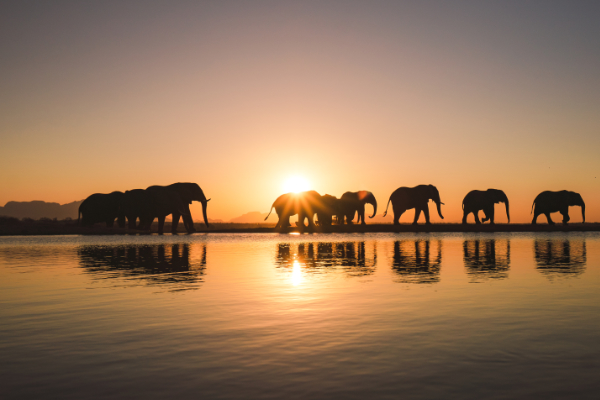
African elephants, the world's largest land mammals, face an unprecedented crisis. Once numbering in the millions across the African continent, these magnificent creatures now stand on the precipice of extinction. The latest scientific data paints a sobering picture that demands immediate global attention and action.
Current Population Status
According to the International Union for Conservation of Nature (IUCN) and African Elephant Specialist Group, the African elephant population has experienced catastrophic decline over the past century:
- Historical population (early 1900s): Estimated 3-5 million elephants
- 1979 population: Approximately 1.3 million
- 2016 Great Elephant Census: 352,271 savanna elephants
- Current estimate (2026): Approximately 415,000 total African elephants
This represents a decline of over 90% in just over a century, with the most dramatic losses occurring in the last 50 years.1,2
Two Species, Two Crises
In 2021, the IUCN officially recognized African elephants as two distinct species, each facing different levels of threat:
African Savanna Elephant (Loxodonta africana):
- IUCN Status: Endangered
- Population: Approximately 350,000-380,000
- Decline rate: 60% over 50 years in some regions
African Forest Elephant (Loxodonta cyclotis):
- IUCN Status: Critically Endangered
- Population: Estimated 35,000-40,000
- Decline rate: 86% over 31 years
The forest elephant, smaller and more elusive than its savanna counterpart, faces the greatest extinction risk due to extensive habitat loss in Central African rainforests and higher vulnerability to poaching.3
The Drivers of Decline
1. Poaching for Ivory
Despite the 1989 international ivory trade ban, illegal poaching remains the primary threat to elephant survival. The numbers are staggering:
20,000-30,000 elephants are killed annually for their ivory tusks
$23 billion: Estimated annual value of illegal wildlife trade globally, with ivory being a major component4
Organized criminal networks, often connected to terrorist organizations, use sophisticated methods to poach elephants and smuggle ivory primarily to Asian markets. Between 2010 and 2024, over 300,000 elephants were killed for their ivory—representing nearly three-quarters of the current population.5
2. Habitat Loss and Fragmentation
Africa's human population is projected to reach 2.5 billion by 2050, leading to unprecedented habitat conversion:
- Elephants have lost approximately 75% of their historic range
- 30% of remaining habitat is fragmented, isolating elephant populations
- Agriculture expansion, infrastructure development, and urbanization continue to encroach on elephant corridors
Habitat fragmentation not only reduces available space but also increases human-elephant conflict, genetic isolation, and vulnerability to poaching.6
3. Human-Elephant Conflict
As human settlements expand into elephant territories, conflicts escalate:
- Elephants raid crops, causing significant economic losses to local communities
- Approximately 500 people are killed by elephants annually in Africa
- 200-300 elephants are killed in retaliation each year
- These conflicts undermine conservation support in local communities7
4. Climate Change
Emerging research indicates climate change is exacerbating elephant vulnerability:
- Increased droughts reduce water and food availability
- Shifting rainfall patterns affect vegetation in elephant habitats
- Climate stress makes elephants more vulnerable to disease and increases competition with humans for resources
Regional Variations
Elephant populations vary dramatically by region, with some areas showing recovery while others face collapse:
Success Stories:
- Botswana: Home to approximately 130,000 elephants (largest population), due to strong anti-poaching measures
- Kenya: Population increased from 16,000 (1989) to approximately 36,000 (2024) through intensive conservation
- South Africa: Stable population of approximately 24,000 due to effective management
Critical Areas:
- Tanzania: Lost 60% of its elephants between 2009 and 2014 (from 109,000 to 43,000)
- Mozambique: National parks lost over 50% of elephants to poaching
- Central Africa: Forest elephant populations declined by 86% in three decades8
The Ecological Impact
Elephants are a keystone species—their loss would trigger cascading effects throughout African ecosystems:
- Seed dispersal: Elephants disperse seeds for hundreds of plant species, some exclusively dependent on elephant digestion
- Habitat creation: By knocking down trees and creating clearings, elephants maintain savanna-woodland mosaics that support biodiversity
- Water access: Elephants dig water holes that benefit countless other species during dry seasons
- Carbon storage: Forest elephants help maintain trees that store atmospheric carbon, making them crucial climate allies
Research suggests that losing forest elephants could result in a 7% reduction in forest biomass, releasing billions of tons of carbon and accelerating climate change.9
Economic Significance
Beyond their ecological value, elephants drive significant economic benefits:
Wildlife tourism generates over $29 billion annually in Africa, with elephant viewing being a primary attraction. A single living elephant can generate $1.6 million in tourism revenue over its lifetime—76 times more than the one-time value of its ivory.10
What Must Be Done
Reversing the elephant crisis requires urgent, coordinated action across multiple fronts:
1. Strengthen Anti-Poaching Efforts
- Increase ranger patrols and provide advanced training and equipment
- Deploy technology (drones, AI-powered monitoring, GPS collars)
- Support community-based conservation programs like the Black Mambas Anti-Poaching Unit
- Enhance international law enforcement cooperation to disrupt trafficking networks
2. Reduce Demand for Ivory
- Strengthen ivory trade bans and close domestic markets
- Implement public awareness campaigns in consumer countries
- Impose strict penalties for ivory trafficking
3. Expand Protected Areas and Corridors
- Establish and effectively manage elephant corridors connecting fragmented habitats
- Create transboundary protected areas for cross-border elephant populations
- Secure critical elephant habitats through land purchases and conservation easements
4. Mitigate Human-Elephant Conflict
- Implement community-based conflict mitigation strategies (beehive fences, early warning systems)
- Provide compensation for crop damage and human casualties
- Engage local communities in conservation benefits through tourism revenue sharing
5. Support Elephant Orphanages and Rehabilitation
Organizations like HERD (Hoedspruit Elephant Rehabilitation and Development) provide critical care for orphaned elephant calves who have lost their families to poaching or human-elephant conflict. These sanctuaries:
- Provide 24/7 specialized veterinary care and nutrition
- Facilitate integration with adoptive elephant herds
- Conduct research on elephant behavior and rehabilitation techniques
- Educate the public about elephant conservation
The Jabulani Herd: A Model for Hope
At HERD's sanctuary, the Jabulani Herd represents a unique conservation success story. This herd, rescued from Zimbabwe in 2002, has become an adoptive family for orphaned elephant calves. With their unusual family structure—most being orphans themselves—they have shown remarkable acceptance of new calves like Khanyisa.
Since 2006, the herd has given birth to five calves, demonstrating their successful adaptation and wellbeing. They have welcomed orphans into their family, providing the essential social structure that baby elephants need to thrive. This model shows that, with proper care and support, elephant populations can recover and orphans can find new families.
Time is Running Out
Scientists warn that without immediate action, African elephants could be functionally extinct in the wild within two to three decades. "Functionally extinct" means populations would be so small and fragmented that they could no longer fulfill their ecological role or maintain genetic diversity.
"The clock is ticking. Every action we take today—or fail to take—determines whether future generations will know elephants only from photographs and museums, or as living symbols of Africa's wild heritage." — Dr. Jane Goodall, DBE, Founder of the Jane Goodall Institute
How You Can Help
The elephant crisis may seem overwhelming, but individual actions make a difference:
- Donate to conservation organizations working on the front lines to protect elephants and combat poaching
- Support eco-tourism that benefits elephant conservation and local communities
- Never buy ivory products and report illegal ivory sales to authorities
- Raise awareness by sharing information about the elephant crisis
- Support elephant orphanages like HERD that care for and rehabilitate orphaned calves
- Advocate for policy change by contacting government representatives to support wildlife protection laws
Every contribution, from spreading awareness to direct financial support, helps turn the tide for Africa's elephants. The Izindlovu Fund works with HERD and other conservation partners to protect elephants through anti-poaching initiatives, habitat preservation, and orphan care.
Sources & References
- African Elephant Specialist Group (AfESG). "African Elephant Status Report 2024." IUCN Species Survival Commission, 2024.
- Chase, M.J., et al. "Continent-wide survey reveals massive decline in African savannah elephants." PeerJ 4 (2016): e2354.
- IUCN Red List. "Loxodonta africana (African Savanna Elephant)" and "Loxodonta cyclotis (African Forest Elephant)." 2021 Assessment.
- World Wildlife Fund (WWF). "Fighting Illicit Wildlife Trafficking: A Consultation with Governments." WWF International, 2025.
- CITES (Convention on International Trade in Endangered Species). "Monitoring the Illegal Killing of Elephants (MIKE) Programme." Annual Reports 2010-2024.
- Hoare, R. "Lessons from 20 years of human-elephant conflict mitigation in Africa." Human Dimensions of Wildlife 20.4 (2015): 289-295.
- Gross, E.M., et al. "Elephants in the village: Causes and consequences of property damage in Botswana." Ecology and Society 23.2 (2018).
- Wittemyer, G., et al. "Illegal killing for ivory drives global decline in African elephants." Proceedings of the National Academy of Sciences 111.36 (2014): 13117-13121.
- Berzaghi, F., et al. "Carbon stocks in central African forests enhanced by elephant disturbance." Nature Geoscience 12.9 (2019): 725-729.
- Naidoo, R., et al. "Complementary benefits of tourism and hunting to communal conservancies in Namibia." Conservation Biology 30.3 (2016): 628-638.