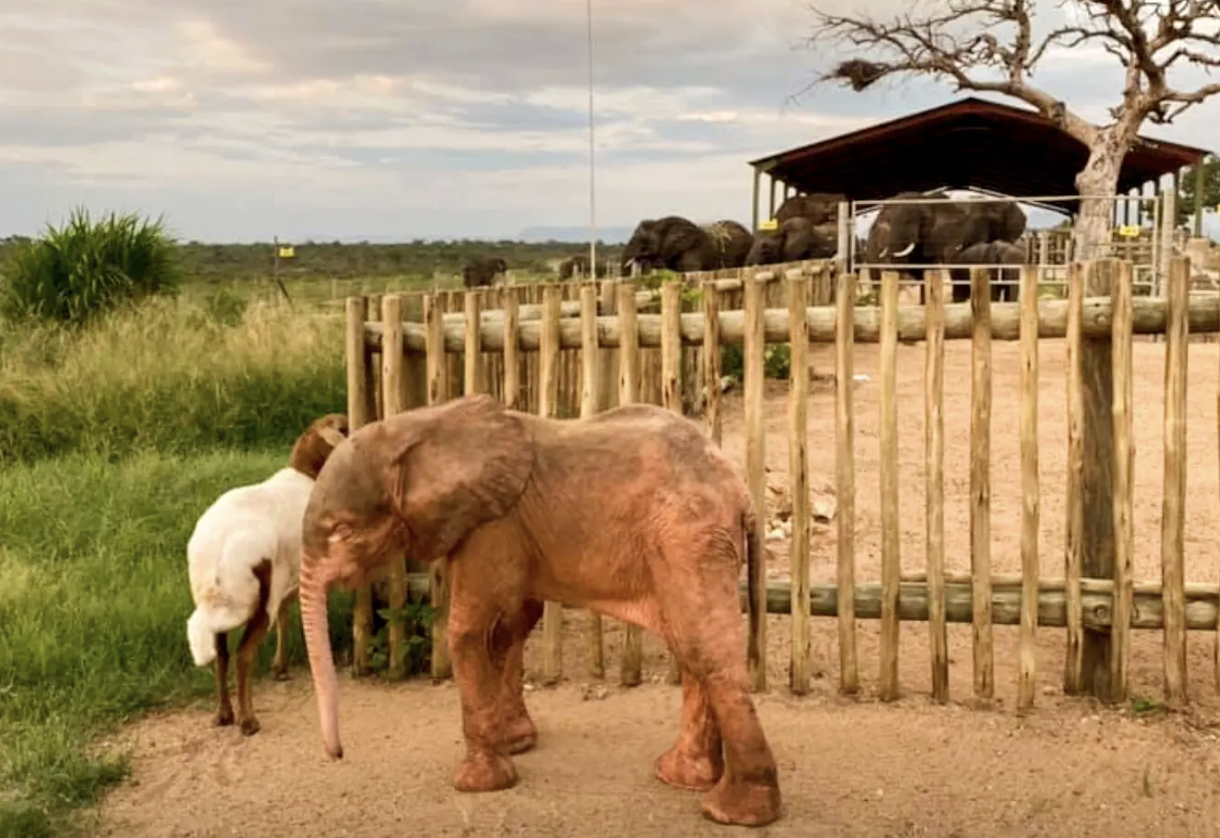
All over Africa, elephants are threatened by poaching and habitat destruction. When a mother elephant is killed in these conflicts, her baby cannot survive on its own. Traumatized, dehydrated, sunburnt, and often injured, these orphaned calves face almost certain death without intervention.
This heartbreaking reality led Adine Roode to take an extraordinary step—creating HERD, South Africa's first dedicated elephant orphanage.
Every elephant needs a herd. Without one, orphaned elephants cannot develop the complex social bonds and skills they need to thrive emotionally and physically.
The Growing Crisis of Elephant Orphans
In recent years, the numbers of orphaned and displaced elephant calves have grown alarmingly. Two primary causes drive this crisis:
- Poaching: Mother elephants are killed for their ivory, leaving helpless calves behind
- Human-Wildlife Conflict: As human settlements expand into elephant habitats, deadly conflicts between people and elephants increase
These babies need more than just food and shelter—they need what every elephant requires: a family. Because of their high intelligence and emotional complexity, elephants are very different from typical wild animals. Their needs are diverse and nuanced, requiring a special kind of management—one with heart and soul and respect, as well as milk and medicine.
A Visionary Solution: HERD
Adine Roode, MD and owner of the Jabulani Herd, founded HERD in April 2019 to provide a unique adoptive family structure for baby elephants in need. But this wasn't just another animal rescue center—HERD represents a revolutionary approach to elephant rehabilitation.
Located on the grounds of Jabulani in Kapama Game Reserve, next to Kruger Park, the orphanage was purposely built near the barns of the Jabulani Herd. This proximity allows caregivers to carefully assess and integrate each baby elephant according to their individual emotional needs.
The Jabulani Herd: An Extraordinary Adoptive Family
What makes HERD truly unique is the presence of the Jabulani Herd themselves. The unusual family structure of this herd—the majority of which are orphans themselves—presents an unprecedented solution for orphaned baby elephants in Southern Africa.
Unlike wild elephant herds that might reject unfamiliar calves, the neighboring Jabulani Herd has graciously and repeatedly accepted orphan elephant calves into their family. These resilient elephants, having experienced trauma themselves, seem to understand what the babies need and offer them comfort, protection, and the social structure essential to an elephant's wellbeing.
State-of-the-Art Facilities with Heart
HERD's facilities are designed with both practical care and emotional wellbeing in mind. The orphanage consists of:
- Three individual nurseries for specialized care of different age groups
- Five communal areas including a kitchenette, storeroom, and bathroom
- Indoor and outdoor playgrounds where baby elephants can explore, play, and develop naturally
- Strategic proximity to the Jabulani Herd for gradual introduction and integration
When a rescued orphan elephant first arrives at HERD, it's often in critical condition—traumatized, dehydrated, sunburnt, and possibly injured. The dedicated team provides around-the-clock intensive care, nursing these fragile babies back to health while beginning the crucial work of helping them process their trauma.
More Than Survival: A Path to Thriving
HERD's mission extends far beyond keeping baby elephants alive. The organization has established comprehensive objectives that prioritize long-term wellbeing and meaningful conservation impact:
Safe Rehabilitation Alternative
HERD provides a safe rehabilitation alternative for elephant orphans that prioritizes their long-term wellbeing. This isn't about quick fixes—it's about giving each elephant the time, care, and family structure they need to heal emotionally and physically.
Rewilding Strategy
One of HERD's most important innovations is their strategic approach to rewilding. Rather than releasing traumatized orphans directly into the wild—where they lack the proper social structure and survival skills—HERD uses a gradual process:
- Building the orphans' ability to deal with wild systems independently
- Allowing them to develop capacity at a reasonable pace
- Maintaining a stable and nurturing system throughout the process
- Taking elephant biology and local context into account
The focus is on mitigating the long-term chronic stress that elephants can experience when released too quickly. With the Jabulani Herd providing a stable elephant social system, orphans can learn, grow, and eventually transition to more independent living when they're truly ready.
Protected Environment for the Jabulani Herd
HERD also provides a protected and supportive environment for the rescued Jabulani Herd themselves. These remarkable elephants promote and enhance their own wellbeing through rewilding while continuing to receive direct care and supervision for their lifetime.
Holistic Conservation Impact
HERD's impact extends far beyond the elephants themselves. The organization takes a holistic approach to conservation that benefits both wildlife and local communities:
Conservation Value
HERD contributes to elephant conservation by providing land to a flagship species that wouldn't otherwise be available. The conservation value lies not only in protecting the species but also in:
- Promoting natural capital and land use
- Providing sanctuary for partially rewilded elephants over their lifespan
- Supporting broader ecosystem health
Community Development
HERD leverages the potential role of elephants in contributing to local development, aligned with sustainable development goals:
- Environmental Education: Programs on the reserve and in local schools
- Economic Development: Job creation and supporting small businesses associated with the elephants
- Social Equity: Reducing poverty and inequality through employment opportunities
- Gender Equality: Empowering women, youth, and disadvantaged communities
- Community Access: Providing local communities with access and connection to the land
Sustainable Value Creation
HERD takes a holistic approach to leveraging elephant goods (including dung products) and services (including ecotourism, cultural value, and existence value). This ensures the sustainability of the land use and protection of the elephants while providing access and value to the local community.
The Power of Expertise and Compassion
Recognizing and accepting the responsibility for taking care of these animals requires tremendous expertise and knowledge. HERD's team must be able to:
- Provide intensive medical care for traumatized and injured babies
- Understand complex elephant psychology and social needs
- Facilitate gradual integration with the Jabulani Herd
- Plan for long-term wellbeing spanning decades
- Balance rewilding goals with ongoing protection
- Maintain the highest standards of animal welfare
This level of care represents society's wish for and expectation of protecting and enhancing vulnerable animals' quality of life—planned and sustained for their full lives.
Success Stories: New Beginnings
HERD strives to care for and rehabilitate orphaned elephants, giving them a new family and a second chance of life with the Jabulani Herd. The integration process is carefully managed, with each baby elephant introduced to the herd according to their individual emotional needs and readiness.
The Jabulani Herd's acceptance of these vulnerable calves demonstrates the incredible empathy and intelligence of elephants. These orphans, once alone and traumatized, find comfort in the gentle touches, protective presence, and social structure that only a herd can provide.
A Beacon of Hope
HERD represents more than just an orphanage—it's a beacon of hope for Africa's elephants. In a continent where elephant populations face unprecedented threats, HERD demonstrates that with dedication, expertise, and compassion, we can give orphaned elephants not just survival, but a genuine second chance at life.
Every baby elephant that arrives at HERD traumatized and alone, and later finds comfort in the trunk of a Jabulani Herd member, proves that healing is possible. Every orphan that learns to play again, to trust again, to be part of a family again—these are victories for conservation and reminders of what we're fighting to protect.
Supporting HERD's Mission
The work of HERD is vital, but it requires significant resources. Each orphaned elephant needs:
- Round-the-clock intensive care in their first weeks
- Specialized formula and nutrition
- Medical treatment and veterinary care
- Experienced caregivers and support staff
- Safe facilities and equipment
- Long-term care spanning decades
Your support helps HERD continue this crucial work—rescuing orphaned elephants, providing expert rehabilitation, and giving them the family structure they desperately need to heal and thrive.
Support HERD Elephant Orphanage Learn More About Our Elephant Projects