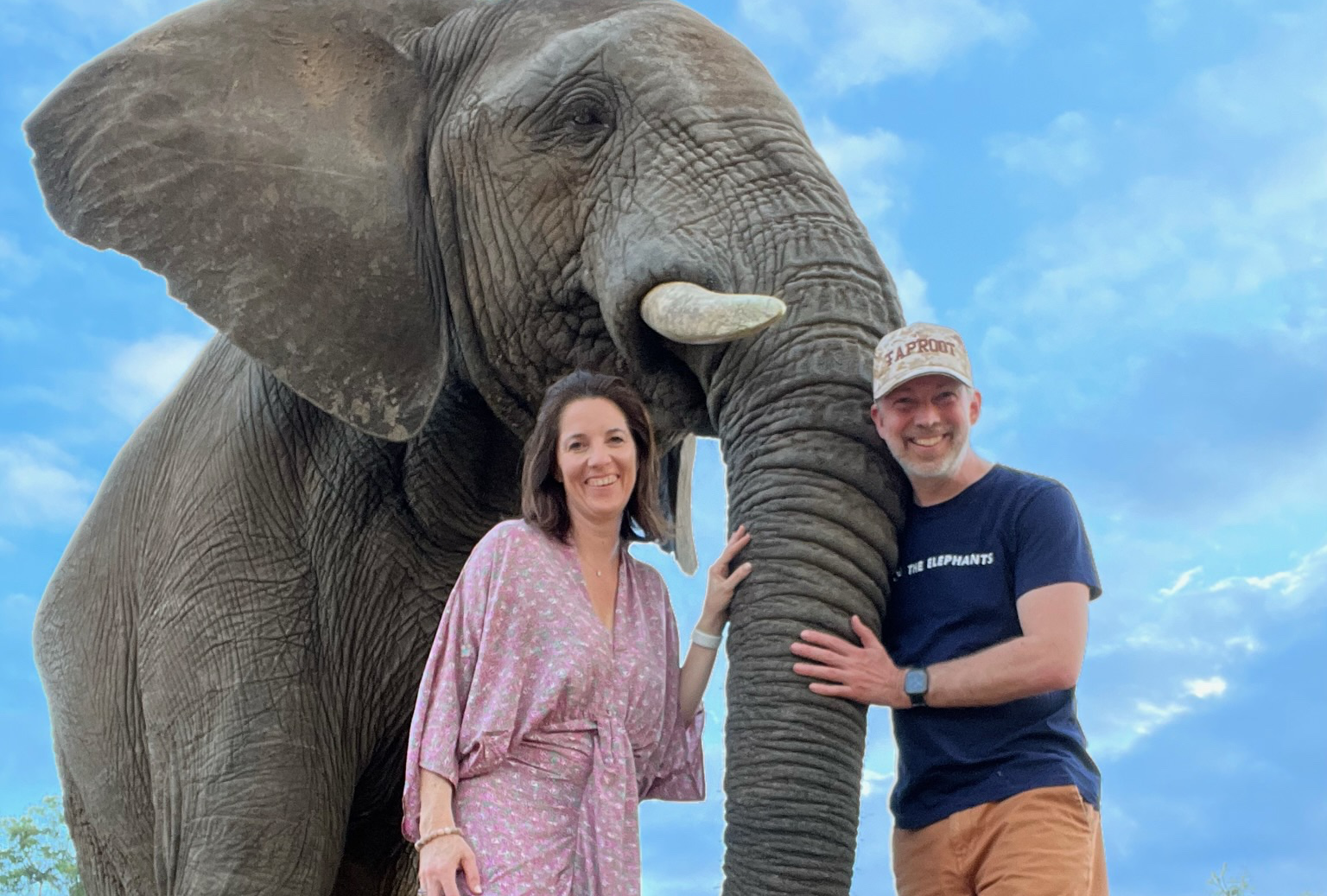
Every great movement begins with a single act of compassion. For Izindlovu Fund, that moment came in the summer of 2019 when a small group of dedicated individuals raised €3,000 to help orphaned elephants in South Africa. What started as one donation has grown into a comprehensive wildlife conservation organization touching multiple facets of conservation across an entire nation.
The Beginning: 73 Hearts for Orphaned Elephants
In 2019, the world was introduced to HERD's 1000 Hearts initiative—an ambitious project by conservationist Adine Roode to establish South Africa's first dedicated elephant orphanage. Through a GoFundMe campaign, a group of passionate wildlife advocates in Belgium raised 73 hearts, amounting to €3,000, to support this groundbreaking effort.
The experience was transformative. The dedication of the HERD team and the profound need for elephant protection inspired the establishment of the Izindlovu Fund in Belgium. The name "Izindlovu," meaning elephants in Zulu, reflected the organization's original focus: raising awareness about elephant protection and conservation in South Africa.
That initial success was just the beginning. The fund went on to donate €10,000 toward the construction of a specialized nursery at the HERD orphanage, and Adine Roode became not just a partner, but a close friend and collaborator in the mission to save Africa's elephants.
A Foundation Built on Trust and Transparency
From the very start, Izindlovu Fund established a principle that would define its operations: direct contact with project founders. This approach ensures that every euro donated is used properly and makes the greatest possible impact. The founders understood that trust is the currency of effective conservation.
All work within the fund is voluntary, with overhead costs covered entirely by sales from the organization's shop. This means that donations go directly to conservation projects, not administrative expenses—a commitment that has earned the trust of supporters worldwide.
The Jabulani Connection: An Unusual Family
HERD's elephant orphanage was strategically located on the grounds of Jabulani in Kapama Game Reserve, next to Kruger Park. The proximity to the Jabulani Herd was no accident—this unusual elephant family, the majority of whom are orphans themselves, presents a unique solution for orphaned baby elephants in Southern Africa.
The Jabulani Herd's capacity to assess and integrate each baby elephant according to their individual emotional needs creates a living model for rehabilitation. Orphaned calves don't just survive—they thrive, learning from elephants who understand their trauma because they've lived it themselves.
Innovation Takes Flight: Wildlife Drone Force
In February 2021, Izindlovu Fund launched an innovative initiative that would bring 21st-century technology to ancient conservation challenges. The Wildlife Drone Force project aimed to enhance wildlife conservation through UAV (unmanned aerial vehicle) technology.
The fund donated drones to both HERD elephants and Transfrontier Africa, all sourced from generous supporters. This project demonstrated the organization's willingness to embrace new tools in the fight to protect wildlife. Drones provide aerial surveillance for anti-poaching efforts, monitor herd movements, and offer researchers unprecedented insights into elephant behavior—all while minimizing human intrusion into wildlife habitats.
Art Meets Conservation: Bronze Elephants for a Cause
The human-elephant conflict has devastating consequences, leaving many young elephants displaced or orphaned. Artist François Vandenberghe, renowned for his lifelike bronze elephant sculptures, found a powerful way to contribute to the solution.
Through connections with both Adine Roode and Oliver Cafmeyer from the Cafmeyer Gallery in Belgium, which exclusively sells Vandenberghe's work, a collaborative art fundraiser was born. Two exquisite sculptures were created based on elephants from the Jabulani Herd, capturing not just their physical presence but their emotional reality as orphans who found family.
These sculptures serve as both artwork and advocacy, emphasizing the continued existence and plight of elephants worldwide while generating crucial funding for their protection.
Expansion: From Elephant Protection to Comprehensive Wildlife Conservation
As the fund grew, so did its vision. The organization recognized that protecting elephants required addressing the entire ecosystem of conservation challenges. This realization led to support for the Black Mambas, an all-female anti-poaching unit making history in South Africa.
Supporting the Black Mambas creates a ripple effect that extends far beyond preventing poaching. By empowering women as rangers, the fund helps entire families—these women serve as primary caregivers in their communities, and their employment raises a new generation equipped with knowledge and strong environmental values. The impact is social, economic, and environmental all at once.
Education: Planting Seeds for Future Conservation
Izindlovu Fund recognized early that lasting conservation requires changing hearts and minds, especially among young people. Environmental and wildlife education emerged as crucial for fostering sustainable coexistence between humans and nature in African communities.
Through an environmental education project at Mpisi Primary School, the fund supports young learners with both knowledge and nutrition. By providing nutritious food bars, the program ensures children have healthy, well-fueled minds and bodies ready to learn about their natural heritage.
During a 2022 trip, the fund partnered with Lewyn from The Bushbabies school program and Adine Roode to establish an elephant awareness project. This program gives students an extraordinary opportunity: hearing stories from elephant carers, observing these magnificent animals up close, touching their trunks, and participating in morning feeding sessions.
For children living near elephants yet rarely experiencing them directly, these encounters are life-changing. They transform elephants from abstract concepts or threats into the complex, emotional beings they truly are.
Rhino Crisis: Answering Another Call
Collaboration with Craig Spencer and Valeria from Transfrontier Africa highlighted another urgent need: rhino orphans. Through personal contact with Adine Roode, Izindlovu Fund became a partner of the HESC Rhino Rehabilitation Centre.
Rhino poaching, driven by demand for rhino horn in Asian countries, has created a crisis across South Africa. Rising poverty has coincided with increased poaching, threatening rhinos in their natural habitat. While rhinos may not be quite as emotionally complex as elephants, caring for a baby rhino involves equally demanding hard work and round-the-clock monitoring.
Each orphaned rhino represents both a tragedy and an opportunity—a chance to save an individual member of a critically endangered species and raise awareness about the devastating impact of wildlife crime.
The Bitcoin Revolution: Financial Innovation for Wildlife
In the fund's most recent evolution, founders Ben and Helen leveraged their extensive expertise in economics and finance to stay ahead of global trends. Through their international connections, they identified Bitcoin—the world's largest decentralized computing network—as a promising solution for conservation funding.
Bitcoin promotes financial inclusivity, reduces transaction costs, and offers accessibility crucial for international donations. By establishing the Bitcoin for Wildlife Conservation project, Ben and Helen demonstrated that Bitcoin's positive impact should extend beyond human rights and welfare to encompass animal protection.
Their knowledge of the Bitcoin ecosystem and strong connections in the space enabled them to establish a Geyserfund fundraiser to cover travel costs for three Black Mambas to attend the Adopting Bitcoin conference in Cape Town. The fund now accepts Bitcoin donations on its website and in its shop, positioning itself at the intersection of technological innovation and conservation.
A Movement Built on Connection
What makes Izindlovu Fund unique isn't just its multi-faceted approach to conservation—it's the web of personal relationships that power every initiative. From Adine Roode becoming a close friend to direct partnerships with rangers, educators, and local communities, the fund operates on the principle that effective conservation is deeply personal.
This approach creates accountability, ensures cultural sensitivity, and builds lasting impact. Rather than imposing solutions from afar, Izindlovu Fund works alongside those who know the land, the animals, and the challenges best.
Looking Forward: The Next Chapter
From 73 hearts and €3,000 in 2019 to a comprehensive conservation organization supporting elephants, rhinos, education, anti-poaching efforts, innovative technology, and financial inclusion, Izindlovu Fund's journey reflects what's possible when passion meets action.
Each project reinforces the others: educated children grow up to become conservation-minded adults; employed women rangers transform their communities; rescued elephants and rhinos serve as ambassadors for their species; technology extends the reach of human protectors; and innovative financing makes it all more sustainable.
The story of Izindlovu Fund is still being written. With every donation, every volunteer hour, every rescued animal, and every educated child, the movement grows stronger. It's a reminder that we don't need to be large organizations with enormous budgets to make a difference—we just need to start, to care deeply, and to build relationships that transform good intentions into real impact.
The elephants that inspired this journey in 2019 are still at the heart of everything Izindlovu Fund does. But now they're joined by rhinos, children, women rangers, innovative technology, and a global community united by one belief: that wildlife deserves not just protection, but a future where humans and animals thrive together.