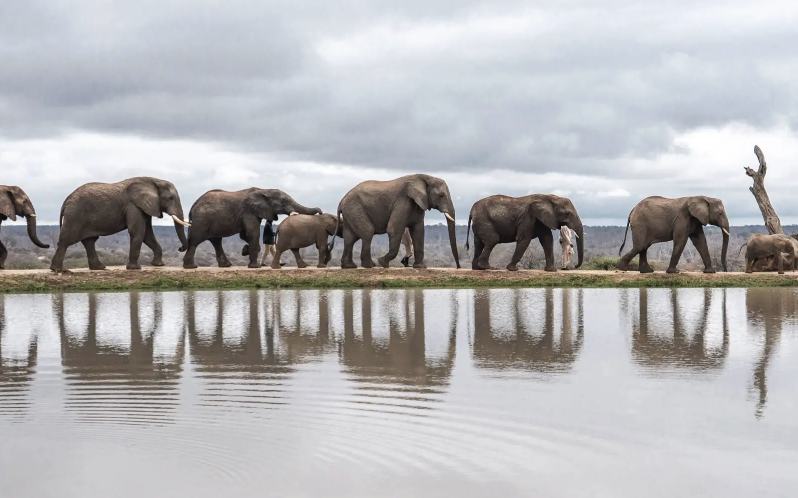
In the heart of South Africa's Kapama Reserve, near the iconic Kruger National Park and the town of Hoedspruit, lives an extraordinary elephant family unlike any other in the world. This is the story of the Jabulani Herd—a close-knit family born from tragedy, resilience, and the remarkable capacity of elephants to heal and nurture.
The Jabulani Herd defies nature's usual rules. While wild elephants form matriarchal herds with bulls visiting occasionally, every member of the Jabulani family—male and female, young and old—is an integral part of their unique family structure.
A Story That Began With One Orphan
The story of this extraordinary family begins in 1997 with a single orphaned elephant calf. Found stuck in a mud wallow, weak and alone, the young elephant was rescued and given a name that means "one who brings joy" in Zulu: Jabulani.
Jabulani was nursed back to health, but like all elephants, he needed more than just physical care—he needed a family. Elephants are among the most social and emotionally complex animals on Earth. Without a herd, they cannot thrive emotionally or develop the social skills essential to their wellbeing.
Little did anyone know that Jabulani's fate was about to intertwine with that of an entire herd of elephants hundreds of miles away, creating a family that would one day provide hope for orphaned elephants across Southern Africa.
The Rescued Herd From Zimbabwe
In 2002, a crucial rescue operation took place in Zimbabwe. A herd of elephants faced an uncertain and dangerous future. These elephants were rescued and relocated to South Africa, where they would have a chance at safety and a new beginning.
When these rescued elephants met Jabulani, something remarkable happened. Despite their own trauma and the fact that Jabulani wasn't born into their herd, they accepted him. The rescued elephants and the orphaned calf formed a bond that would become the foundation of what we now know as the Jabulani Herd.
This was the beginning of something unprecedented—a multi-generational family of rescued elephants who would later prove capable of extraordinary compassion toward other orphans in need.
A Unique Family Structure
What makes the Jabulani Herd truly exceptional is their family structure, which differs significantly from typical wild elephant herds.
Breaking the Traditional Pattern
In the wild, elephant society follows a strict matriarchal structure:
- Herds consist of related females and their young
- Male elephants leave the herd upon reaching adolescence
- Bull elephants join herds temporarily for mating
- Males typically have little involvement with younger herd members
The Jabulani Herd operates differently. Here, every member—both male and female, young and old—is an integral part of their unique family. Male elephants remain active, caring members of the herd, participating in the nurturing and protection of younger elephants. This inclusive family structure has proven crucial to their success as adoptive parents.
Growing and Evolving Family Dynamics
Since 2006, the Jabulani Herd has continued to grow and evolve. Five elephant calves have been born to the herd, each birth a celebration of hope and renewal. Additionally, two orphaned elephants have been successfully introduced and integrated into the family.
With each new arrival—whether born into the herd or adopted—the intra-herd dynamics have changed significantly. The elephants have had to adapt, negotiate new relationships, establish bonds, and expand their family circle. Through it all, they've demonstrated remarkable flexibility and emotional intelligence.
A Lifeline for Orphaned Elephants
The unusual family structure of the Jabulani Herd—the majority of whom are orphans themselves—presents a unique and vital solution for orphaned baby elephants in Southern Africa.
Understanding the Critical Need
Orphaned elephants vitally need to find a second herd to ensure their emotional wellbeing and survival. In the wild, elephant calves separated from their herds face almost certain death, not just from predators or lack of food, but from the psychological trauma of losing their family.
Young elephants learn everything from their herd:
- How to use their trunks effectively
- What plants are safe to eat
- Where to find water during dry seasons
- How to navigate their territory
- Complex social behaviors and communication
- How to process trauma and stress
Without a herd to teach them these essential skills and provide emotional support, orphans cannot develop properly—even if their physical needs are met.
An Unprecedented Solution
Unlike wild elephant herds, which typically reject unfamiliar calves, the Jabulani Herd has graciously and repeatedly accepted orphan elephant calves into their family. This willingness to embrace orphans is extraordinary and rare.
Perhaps because the majority of the Jabulani Herd members are themselves orphans or rescues, they seem to possess a unique understanding of what these traumatized babies need. They offer:
- Physical comfort through gentle trunk touches and embraces
- Constant companionship and reassurance
- Protection from threats and dangers
- Teaching and guidance in elephant skills and behaviors
- A stable social structure to help process trauma
- The sense of belonging that every elephant needs
The success of these integrations has made the Jabulani Herd an essential partner in elephant conservation efforts throughout Southern Africa.
Living at Kapama Reserve
The Jabulani Herd calls Kapama Reserve home—a protected area close to Kruger National Park in South Africa's Limpopo Province, near the town of Hoedspruit. This location provides them with:
- Safe, expansive habitat to roam and forage
- Protection from poaching threats
- Access to water, diverse vegetation, and natural elephant habitat
- Connection to the broader Greater Kruger ecosystem
- Expert care and monitoring when needed
At Kapama, the Jabulani Herd can live as naturally as possible while remaining protected. They determine their own daily routines, social interactions, and movements across their home range—with human intervention only when necessary for their health and safety.
Meet the Extraordinary HERD
The Jabulani Herd works in partnership with HERD (Hoedspruit Elephant Rehabilitation and Development), South Africa's first dedicated elephant orphanage. This partnership creates a comprehensive system for rescuing, rehabilitating, and providing lifetime care for orphaned elephants.
When orphaned baby elephants arrive at HERD's specialized orphanage facilities, they receive intensive medical care, nutrition, and emotional support. As they heal and grow stronger, they're gradually introduced to the Jabulani Herd—at a pace determined by each individual elephant's emotional readiness.
The Jabulani elephants approach each new orphan with patience and gentleness, allowing the traumatized calf to set the pace for integration. Over time, bonds form, trust builds, and the orphan discovers they're not alone anymore—they have a family.
Supporting the Jabulani Herd
Izindlovu Fund is an official partner of the HERD Trust, ensuring that all donations received are fully transferred to the Trust in direct support of the Jabulani elephants.
Your support helps provide:
- Daily nutritional supplementation and specialized care
- Veterinary services and medical treatments
- Habitat management and protection
- Expert handlers and caregivers
- Facilities and resources for orphan integration
- Long-term security and sustainability for the herd
Personal Connection
Because Izindlovu is in close contact with the HERD team in South Africa, donors receive a personal thank you certificate when supporting one of the elephants. This creates a meaningful connection between supporters worldwide and the individual elephants whose lives they're helping to protect.
You can support individual members of the Jabulani Herd, contribute to the general Herd fundraiser, or support the HERD orphanage that continues to rescue and rehabilitate baby elephants who will eventually join the Jabulani family.
Why This Matters
The Jabulani Herd represents something profound in elephant conservation. They prove that:
- Elephants can recover from trauma with proper support
- Rescued elephants can live fulfilling, natural lives
- Orphaned elephants can find new families and thrive
- Compassion and understanding can overcome the deepest wounds
- Conservation can work when it prioritizes animal wellbeing
In a world where elephant populations face unprecedented threats from poaching and habitat loss, the Jabulani Herd offers hope. They demonstrate that with dedication, expertise, and compassion, we can provide orphaned elephants not just with survival, but with something every elephant desperately needs: a family.
Every orphan that finds comfort in the trunk of a Jabulani Herd member, every calf born into their unique family, every day this extraordinary herd lives together in peace—these are victories worth celebrating and protecting.
Support The Jabulani Herd Learn More About Elephant Conservation