The Discovery
On Monday, January 6th, 2020, a female albino elephant calf, estimated to be only four months old, was found trapped in a horrific snare. Her wounds indicated she had been trying desperately to free herself for several days, as they were deep and maggots had already started eating into the open flesh.
She had severe lacerations around the back of her ears and neck that stretched around her mouth, slicing deeply into both her cheeks and into her mouth cavity. There was no sign of her herd anywhere. We cannot even imagine how painful it must have been for her, both physically and mentally.
Arrival at the Orphanage
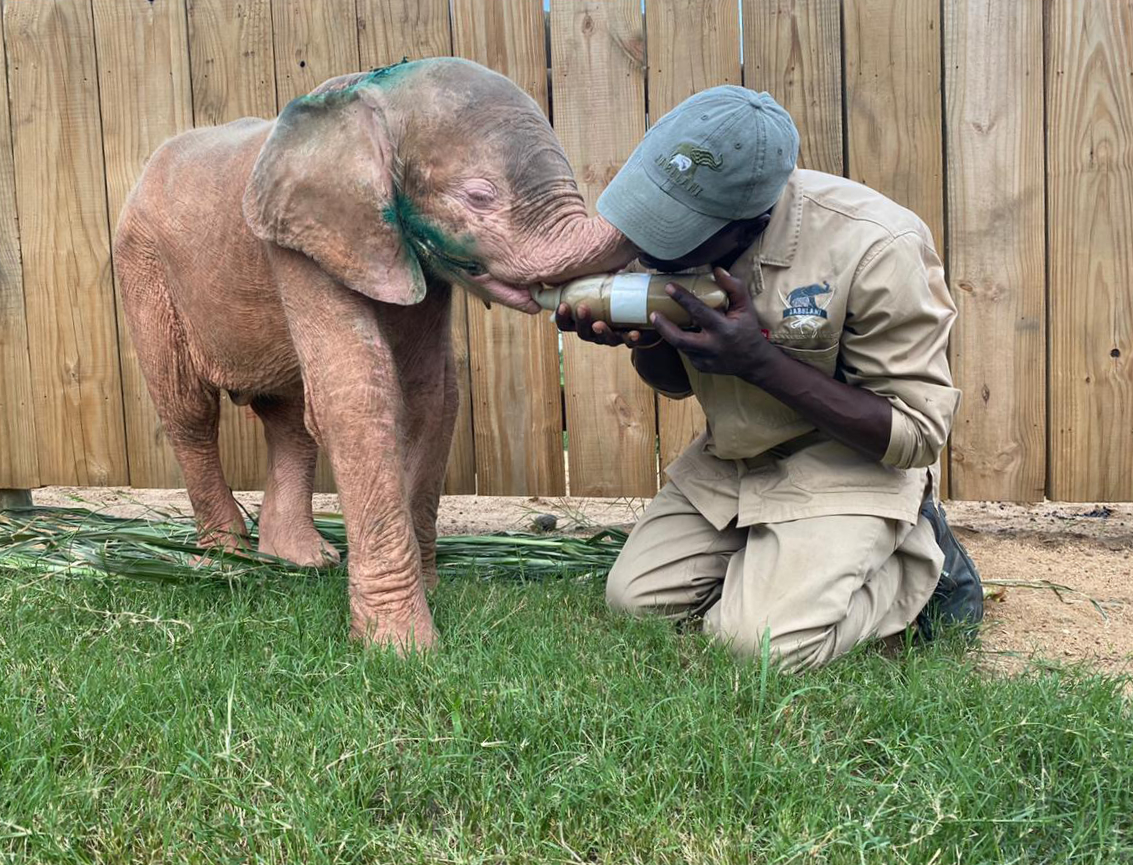
When the little fighter arrived at the HERD orphanage, she woke up to a beautiful sunrise. This inspired Adine Roode from the elephant orphanage to name her "Sunshine" as her little soul reflected such innocence and purity in the light of the morning sunshine. Afterward, she was given a traditional African name. As she belongs to Africa, her name is now "Khanyisa", which means Sunshine or Light in the local Shona language.
Initial Treatment and Care
Since her arrival, Khanyisa showed good signs of progression. The experienced orphanage team from HERD did everything needed to help her in her fight for survival.
Her wounds required ongoing treatment throughout each day. Her fluid intake was crucial in this phase. Baby elephants are one of the most challenging animal species to hand-rear, and their condition can change within hours.
The team at HERD continually adjusted the milk formula to improve her drinking and meet her nutritional needs. As she was not consuming the full amount initially, wildlife veterinarian Dr. Ben Muller decided to administer fluids rectally, as this method has proven successful with elephants. It is less invasive and less stressful than using a drip, which was especially important considering her body weight and severe dehydration following her traumatic ordeal.
She currently takes twelve feedings a day, every 2 hours, with each milk formula supplemented with medicines.
Stitching the Mouth and Cheeks
The snare that was wrapped around Khanyisa's mouth and cheeks had sliced deeply into her flesh. As maggots ate away at the open wounds while she was alone in the wild, holes were created into her mouth. After the wounds were continually cleaned to eradicate as much potential infection as possible, the wildlife vet carefully stitched up little Khanyisa's cheek and mouth wounds.
In the days following the stitching, she did not drink well, probably due to the discomfort of the stitches. Since then, her drinking has become easier each day.
Stitching Behind the Ears
Khanyisa also had deep lacerations behind her ears from the snares. The next step in her treatment was stitching these wounds.
As she had lost part of her ear lobe and the veins were clotted from her injuries, sedation was very difficult. During the procedure, wildlife veterinarian Dr. Rogers decided to stitch only the right ear, as doing both at the same time might be too uncomfortable for her. Her ear injuries were positioned right in the crease where her ear flaps, and it was her right ear that was injured the most during her ordeal, with the top section sliced off completely.
We are happy to report that Khanyisa's ear stitching procedure was a success!
The night after the procedure, she slept a lot and did not drink much. But Khanyisa is a big little fighter and was playing in the orphanage gardens the very next day.
During that day, she also started drinking most of her milk bottle feedings. Unfortunately, she experienced a bout of diarrhea around midday which lasted a few hours. Adine adjusted some of her formula, and her stools began becoming solid again, though still a little less solid than usual.
Since then, Adine successfully removed all the stitches without much discomfort for the little calf. She was more sensitive behind her ears, but the wounds were looking good and improving every day.
Stem Cell Treatment
Khanyisa's wounds proved to be the greatest challenge for HERD's rehabilitation team thus far.
The team began a new stem cell treatment which helped the wounds heal significantly. The stem cell treatment is a skin-restoring serum that combines plant-derived stem cells cultivated from Argan tree and Comfrey roots, which help to regenerate dry and damaged skin. With a natural extract from the aerial part of Onopordum Acanthium, the treatment helps to increase skin turnover and promote healing.
Khanyisa Today
Khanyisa is now doing very well. She loves water and likes to play and run throughout the day. She also gets a lot of comfort from dense vegetation. When she first arrived and had the opportunity to venture outside, she headed straight for long, thick grass and bushes. Perhaps this was because it was the only protection she had when she was stranded all alone and trapped in the snare. Maybe it gave her a feeling of comfort when she was scared of all the potential dangers that surrounded her.
She now weighs 174 kg, which is a remarkable gain of 50 kg since she arrived at HERD weighing just 124 kg!
"There is something so peaceful about little Khanyisa. She is full of grace and love. She feels pure. There is no other way to describe her."
Integration with the Jabulani Herd
As she is doing so well, the introduction of Khanyisa to the Jabulani herd has already begun. This is a slow, careful introduction as the carers at HERD need to monitor both Khanyisa and the elephant herd to ensure they are not stressed or overwhelmed. The integration process is essential for Khanyisa to learn important social behaviors and thrive as part of a family.
How You Can Help
Khanyisa's story is one of hope, resilience, and the incredible dedication of the HERD team. Her recovery would not have been possible without supporters like you. Your donations help provide:
- 24/7 specialized veterinary care and wound treatment
- Nutritious elephant formula and specialized medicines
- Safe sanctuary environment and enrichment
- Expert integration support with the Jabulani herd
- Protection from poaching threats and ongoing rehabilitation