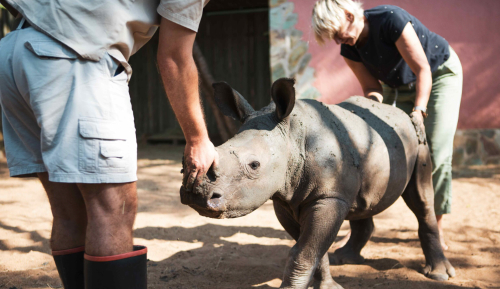
Rhino poaching has been driven by the demand for rhino horn in Asian countries, particularly Vietnam and China, where it's used as a status symbol to display success and wealth, and in Traditional Chinese Medicine. The surge in poverty, particularly since the pandemic, has unfortunately coincided with an increase in poaching, posing a severe threat to rhinos in their natural habitat.
When a rhino calf loses its mother to poaching, it faces almost certain death without immediate intervention. These orphaned babies need specialized, intensive care to survive—and one organization has been providing that lifeline for over three decades.
Rhino calves, just like elephant calves, are extremely fragile. Getting them onto milk bottles to see them through the initial stages of their young lives is complex, and caring for a baby rhino requires round-the-clock monitoring and expertise.
HESC: A Legacy of Wildlife Rehabilitation
HESC—the Hoedspruit Endangered Species Centre—is home to a variety of animal and bird species but is particularly experienced in raising and caring for rhino baby orphans. Founded by Lente Roode in 1988, HESC has been actively working on wildlife rehabilitation for over 35 years.
Lente Roode is the mother of Adine Roode, founder of HERD (the elephant orphanage we've featured in previous posts). This remarkable family has dedicated their lives to saving Africa's most vulnerable wildlife. Before Adine started the HERD elephant orphanage, her life was focused around rhino and elephant rehabilitation at HESC—a foundation of expertise that would later prove invaluable in creating South Africa's first dedicated elephant orphanage.
A Family United by Conservation
Adine Roode remains deeply connected to HESC and rhino conservation. As someone experienced in the intricacies of rhino care, she still loves and cherishes these magnificent animals. When new rhino orphans arrive at HESC, Adine often helps out, bringing her decades of expertise to assist with the most critical early stages of rehabilitation.
This continuity of care—spanning from mother to daughter, from rhinos to elephants and back—creates a comprehensive approach to wildlife rehabilitation that few organizations can match.
The Critical Challenge of Rhino Rehabilitation
Rhino calves are extremely fragile. When they arrive at HESC, they're often:
- Severely traumatized from witnessing their mother's death
- Dehydrated and malnourished
- Injured from the poaching incident or time spent alone
- In shock and refusing to eat or drink
- Vulnerable to infection and disease
The Complexity of Early Care
Getting orphaned rhino calves onto milk bottles is a complex process. While rhinos are not quite as emotionally complex as elephants, taking care of a baby rhino is still incredibly hard work. The initial stages require:
- Round-the-clock monitoring: 24/7 supervision to ensure the calf's survival
- Specialized nutrition: Carefully formulated milk replacements that meet their specific dietary needs
- Temperature regulation: Maintaining proper body temperature, especially at night
- Psychological support: Creating a sense of safety and comfort for traumatized calves
- Medical intervention: Treating injuries and preventing infections
- Gradual socialization: Helping them form bonds with caregivers and eventually other rhinos
The dedication required cannot be overstated. Caregivers often sleep near the rhino nurseries, waking multiple times through the night to feed, comfort, and monitor these vulnerable babies.
Understanding the Poaching Crisis
To effectively combat rhino poaching, we must understand its drivers. The demand for rhino horn in Asian countries—particularly Vietnam and China—fuels this illegal trade. Despite having no proven medicinal properties, rhino horn is valued for:
- Status Symbol: Displaying success and wealth
- Traditional Medicine: Unfounded beliefs about healing properties
- Investment: Some view it as a commodity to store wealth
Globally, economic conditions have been challenging since the pandemic. In South Africa, where poverty is on the rise, this economic pressure unfortunately coincides with increased poaching activity. Desperate communities sometimes turn to poaching as a way to escape poverty—making conservation not just an environmental issue, but a socio-economic one as well.
A Multi-Pronged Solution
HESC and its partners understand that saving rhinos requires more than just rehabilitating orphans. It demands a comprehensive strategy addressing multiple fronts simultaneously.
Prevention Through Anti-Poaching
To ensure the protection of rhinos and other wildlife, HESC works closely with the Black Mambas Anti-Poaching Unit. Both black and white rhinos are monitored to strategize anti-poaching patrols and conservation management.
The monitoring process includes:
- Tracking rhinos through field patrols
- Camera traps positioned strategically across reserves
- Recording location and movement patterns
- Assessing overall health and population dynamics
- Early detection of poaching threats
This data allows rangers to position themselves effectively, respond quickly to threats, and ensure that rhino populations stay safe and strong.
Partnerships With Tribal Communities
During the past several years, Transfrontier Africa has focused extensively on strengthening partnerships with adjacent tribal communities. Director Craig Spencer—whom Izindlovu Fund met in February 2020—has worked to develop new technologies and partnerships to combat illegal wildlife trade.
Transfrontier Africa initiated the Balule Research Facility, which partners with several local and international research institutions. Their approach addresses problems through multiple lenses:
- Ecological Research: Understanding rhino behavior, habitat needs, and population dynamics
- Protected Area Management: Improving security and resource management
- Socio-Economic Solutions: Creating alternative income opportunities for communities
- Technological Innovation: Deploying new tools for monitoring and protection
- Tactical Implementation: Effective on-the-ground strategies
Since meeting Craig Spencer, Izindlovu Fund has worked together with Transfrontier Africa to create more awareness about rhino conservation—recognizing that local community partnership is essential to long-term success.
Environmental Education: Bush Babies Program
The Bush Babies program offers environmental education to 10 local schools in communities surrounding Greater Kruger National Park. Children between the ages of 12-17 years (Grades 6-7) participate in a program interlinked with the school curriculum.
This comprehensive program offers in-depth introductions to:
- Conservation principles and practices
- Ecology and ecosystem functions
- The Big Five species
- The critical importance of rhinos
- Human-wildlife coexistence
Schools are visited weekly, with different themes explored throughout the academic year. The goal is to familiarize learners with their natural environment and emphasize the importance of conserving it for future generations.
Special Educational Initiatives
The Bush Babies program includes innovative special themes:
Tour My World: Volunteers from Transfrontier Africa—representing countries from around the world—visit classrooms to teach Bush Babies about their home countries, including climate, animals, and special features. This broadens students' perspectives and connects local conservation to global citizenship.
Protectors of the Rhino: The Black Mamba Anti-Poaching Unit visits schools to teach learners about poaching and its impacts. When students see these empowered women protecting wildlife, they understand that conservation is a viable career path and that their communities play a crucial role in protecting rhinos.
Why Education Matters
Educating the next generation is perhaps the most powerful long-term strategy for rhino conservation. When children understand:
- Why rhinos are important to ecosystems
- How wildlife tourism benefits their communities economically
- The real impact of poaching on families and futures
- That conservation offers meaningful career opportunities
...they become advocates for wildlife rather than participants in its destruction. They bring knowledge home to their families and eventually raise their own children with conservation values.
The Integrated Approach
What makes HESC's approach particularly effective is how all these elements work together:
- Rehabilitation saves individual rhino orphans and maintains genetic diversity
- Anti-poaching patrols prevent rhinos from being killed in the first place
- Community partnerships address the economic drivers of poaching
- Research provides data to guide conservation strategies
- Education creates long-term cultural change that protects wildlife for generations
No single approach can solve the rhino crisis. But when rehabilitation, prevention, community development, research, and education work together—coordinated by organizations like HESC, Transfrontier Africa, and supported by partners like Izindlovu Fund—real progress becomes possible.
Hope for the Future
Every rhino calf that survives at HESC represents hope. Each one that grows strong enough to eventually return to protected reserves adds to the genetic pool of these critically endangered animals. The bonds formed between traumatized orphans and their dedicated caregivers demonstrate the power of compassion in conservation.
But the real hope lies in the comprehensive approach: orphans receiving world-class care, anti-poaching units protecting wild populations, communities finding economic alternatives to poaching, researchers providing crucial data, and children learning to value and protect their natural heritage.
This is the future of conservation—and with your support, it's a future where rhinos can thrive once again.
Supporting Rhino Conservation
The work of HESC and its partners is vital, but it requires significant resources. Each orphaned rhino needs:
- Specialized milk formula and nutrition
- Round-the-clock care from experienced staff
- Veterinary treatment and medications
- Secure facilities and equipment
- Long-term care spanning years
- Anti-poaching support to protect wild populations
- Educational programs for communities
- Research to guide conservation strategies
Your support helps HESC continue this crucial work—rescuing orphaned rhino calves, preventing poaching, partnering with communities, and educating the next generation of conservationists.
Support Rhino Orphan Care Learn More About Rhino Conservation