Africa's ecosystems are a cornerstone of our planet's health. Protecting them means protecting our future. We can only safeguard Africa's biodiversity by spreading knowledge and raising awareness so people and wildlife can thrive together.
Environmental and wildlife education is crucial for fostering sustainable coexistence between humans and nature in African communities. By understanding the interconnectedness of ecosystems, communities can better appreciate the role of wildlife in maintaining ecological balance and recognize the importance of conserving natural habitats.
Unfortunately, human-wildlife conflicts threaten these ecosystems. Local education is key—by understanding Africa's ecosystems, we protect its wildlife, its communities, and our world.
Why Wildlife Education Matters
Economic Benefits Through Conservation
Educating communities about wildlife leads to tangible economic benefits. Tourism, particularly eco-tourism, is a significant source of income in many African countries. Well-preserved wildlife and natural environments attract tourists, generating revenue and creating jobs.
By teaching communities the value of conservation, they can actively participate in and benefit from sustainable tourism initiatives. When locals understand that living elephants attract tourists who spend money in their communities, conservation becomes an economic imperative, not just an environmental ideal.
Reducing Human-Wildlife Conflict
Human-wildlife conflict is a significant issue in many parts of Africa, where expanding human populations encroach on animal habitats. Education programs help mitigate these conflicts by promoting practices that reduce the risk of encounters and damage.
For instance, teaching farmers how to protect their crops from elephants or how to safely coexist with predators can reduce tensions and improve safety for both humans and wildlife. Knowledge transforms elephants from destructive threats into neighbors worth protecting.
Enhancing Environmental Stewardship
Environmental education fosters a sense of stewardship and responsibility towards the natural world. When people understand the long-term impacts of activities like deforestation, poaching, and pollution, they are more likely to adopt sustainable practices.
This stewardship is vital for the preservation of Africa's rich biodiversity and natural resources. It ensures that conservation efforts have local champions who understand why protecting wildlife matters for their own future.
Promoting Health and Well-being
A healthy environment directly contributes to community well-being. Clean water, air, and soil are fundamental for human health. Environmental education emphasizes the importance of protecting these resources, leading to improved public health outcomes.
Additionally, access to natural spaces has been shown to enhance mental and physical well-being, further underscoring the need for conservation. Protected wildlife areas provide recreational opportunities and ecosystem services that benefit entire communities.
Our Grassroots Education Initiatives
At Izindlovu Fund, we believe that grassroots education initiatives are an important factor in preserving our planet's biodiversity. Grassroots initiatives are bottom-up approaches which are community-based and created to address localized problems.
Projects backed by local organizations can quickly gain momentum on the local and long-term level because they are generally enacted by local actors who understand the specific challenges and opportunities in their communities.
The BushBabies Environmental Education Program
The BushBabies offer an Environmental Education Program to 10 local schools in the communities surrounding Greater Kruger National Park. Children between the ages of 12-17 years (Grades 6-7) participate in programming interlinked with the school curriculum.
This program offers in-depth introductions to:
- Conservation principles and practices
- Ecology and ecosystem interconnections
- The Big Five and their ecological roles
- The importance of rhino conservation
Schools are visited on a weekly basis, with lessons covering different aspects based on daily themes. This consistent presence familiarizes learners with their natural environment and emphasizes the importance of conserving it for future generations.
HERD's Elephant Conservation Education
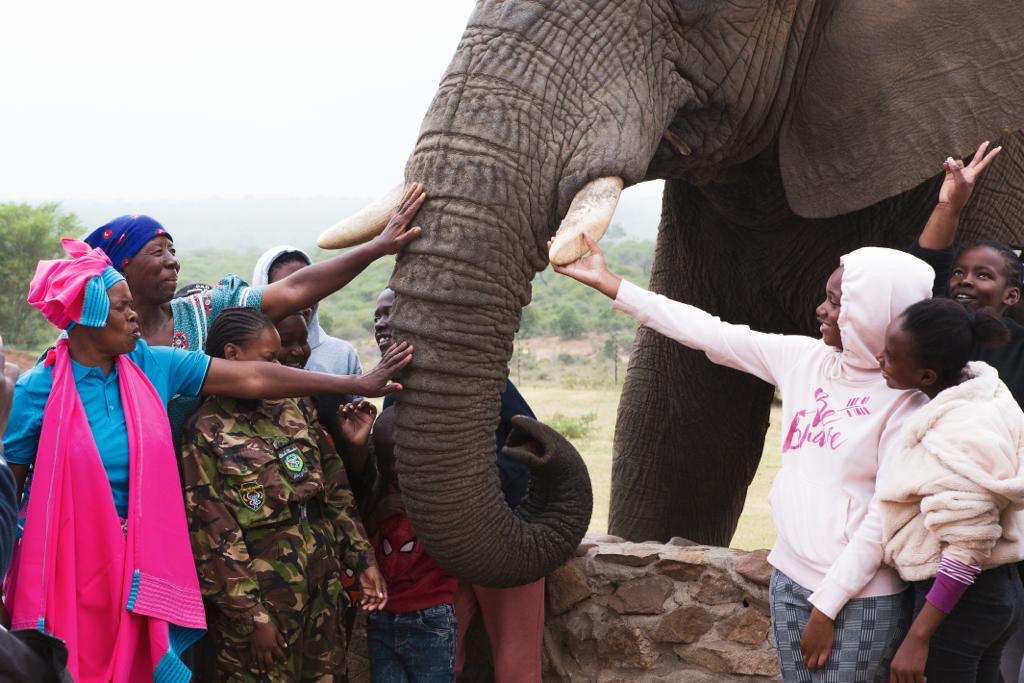
Through our collaboration with HERD, students from the BushBabies program visit the HERD stables to learn about elephant conservation directly from the carers. They hear real stories, observe the animals, touch their trunks, and participate in morning feeding sessions.
This hands-on experience provides children with a rare opportunity to get close to African elephants—often a once-in-a-lifetime experience, even though they live adjacent to these magnificent animals. The direct connection transforms abstract conservation concepts into tangible, emotional experiences.
You can sponsor one child for just €28 to participate in the elephant conservation education program, covering travel costs, food, and the educational experience. One group with 20 kids and 2 teachers totals €560.
Our goal is to sponsor 5 groups of 20 kids—100 students in total—giving them this transformative conservation experience.
The Black Mambas: Role Models in Conservation
The Black Mambas Anti-Poaching Unit plays a crucial role in our education initiatives. These women are not only anti-poaching rangers but also mothers and primary caregivers in their communities. Many are the sole breadwinners in families where men are often disengaged from household responsibilities.
Becoming a ranger provides these women with vital income amidst high unemployment rates in South Africa, giving them professional identity and transforming their lives. As rangers, they understand that poaching threatens the safari economy and job creation—and they share this knowledge with schoolchildren.
The Black Mambas serve as powerful role models. When they visit classrooms in their uniforms, students are inspired to consider careers in conservation beyond traditional roles like teaching or mining. They demonstrate that women can be powerful protectors of wildlife.
Additionally, the Black Mambas instill confidence in children during encounters with wildlife, such as seeing an elephant for the first time. Despite living near wildlife, many kids have never seen these animals up close. The Mambas' presence helps bridge that gap, fostering deeper connections between children and their natural heritage.
Connecting Communities Across Continents
We're creating connections that extend beyond South Africa:
South African Student Connections
We've established a collaboration between the elephant orphanage HERD, the BushBabies school program, and the Black Mambas through Transfrontier Africa. This creates a local South African connection where students can learn about elephant conservation directly from those working on the front lines.
European-African Student Exchange
We're developing collaborations between European students and South African students to share experiences about biodiversity changes and wildlife encounters in their respective regions. Through the BushBabies' "Tour My World" theme, Transfrontier Africa volunteers from around the world visit classrooms to teach children about their home countries—including climate, animals, and special features.
This global perspective helps students understand that conservation is a worldwide effort, with different challenges and solutions in different regions.
HERD's Comprehensive Conservation Program
Adine Roode, founder of HERD, has the vision and dedication to keep young minds informed about the importance of the environment and its existence. With extensive conservation experience, Adine has established:
- HERD's Elephant Conservation Program: Providing sustainable homes for African elephants by investing in wilderness, biodiversity, and ecosystems
- Lessons in Conservation (LIC): Educational programs with local schools like Mpisi Primary School
- Community Projects: Engaging local communities in conservation efforts
- Sustainability Initiatives: Teaching and modeling sustainable practices
- Elephant Research: Contributing to scientific understanding of elephant behavior and needs
- Elephant Orphanage: Rescuing and rehabilitating orphaned elephants
In a country where wild habitats are disappearing and fences cut through elephants' migration pathways, HERD aims to create sanctuaries for the rehabilitation and reintegration of displaced elephants—and to educate the next generation about why this work matters.
The Long-Term Impact of Grassroots Education
Education is not only about having a degree—it's about being willing to see the bigger picture, being broad-minded, and valuing indigenous and local knowledge. This kind of education starts from the bottom-up: grassroots education.
When children learn that conservation creates jobs, that protecting elephants means protecting their community's economic future, and that they can be part of the solution, transformation happens. These children return home with new perspectives, share what they've learned with families, and grow into adults who make conservation-minded decisions.
The ripple effects are profound:
- Communities that once saw wildlife as threats begin to see them as assets
- Young people pursue careers in conservation, creating local expertise
- Families adopt sustainable practices taught through children's education
- Human-wildlife conflict decreases as understanding increases
- Local communities become active participants in protecting their natural heritage
Empowering Communities to Thrive at Home
Empowering communities with education helps reduce human-wildlife conflicts and encourages people to thrive at home, rather than leaving rural areas in search of opportunities elsewhere. When conservation creates local employment, provides education, and generates economic benefits, communities have reasons to stay and protect their remarkable natural surroundings.
Wildlife education is truly key for people to thrive at home—connecting conservation with community prosperity in a sustainable cycle that benefits both people and wildlife.